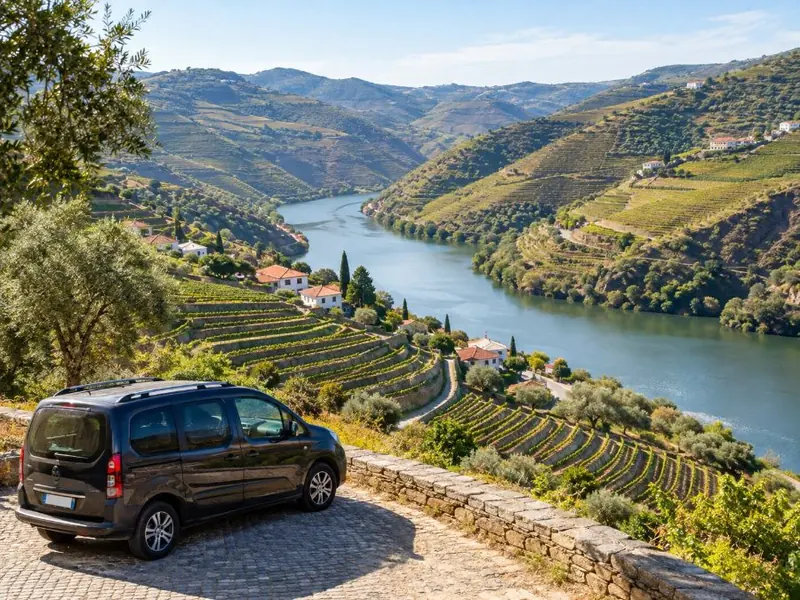
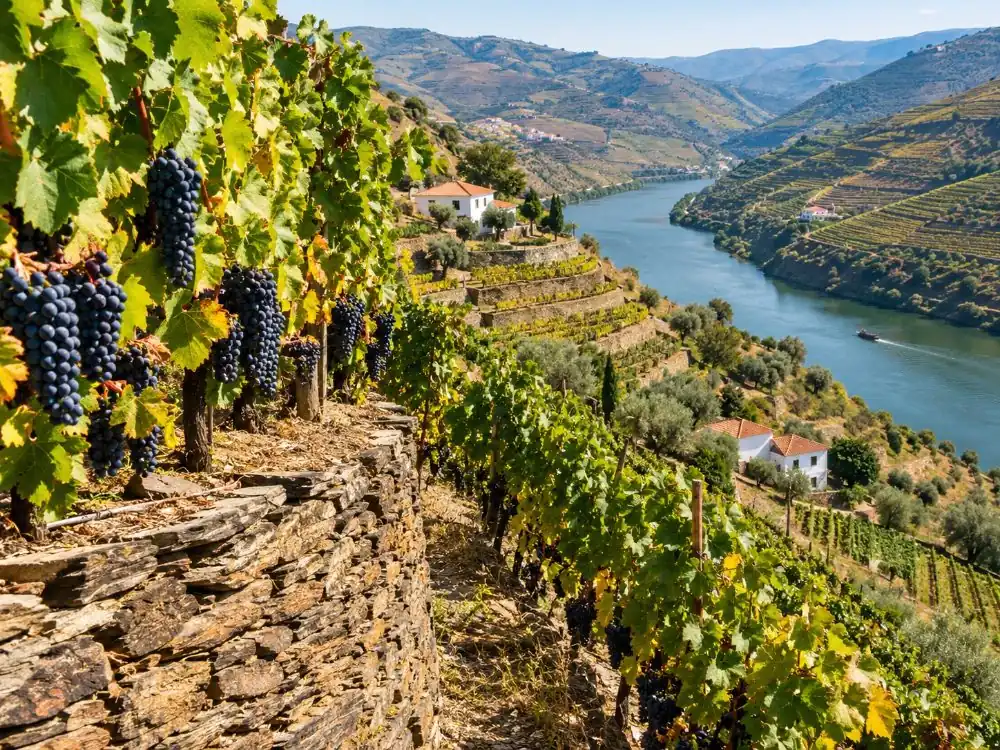
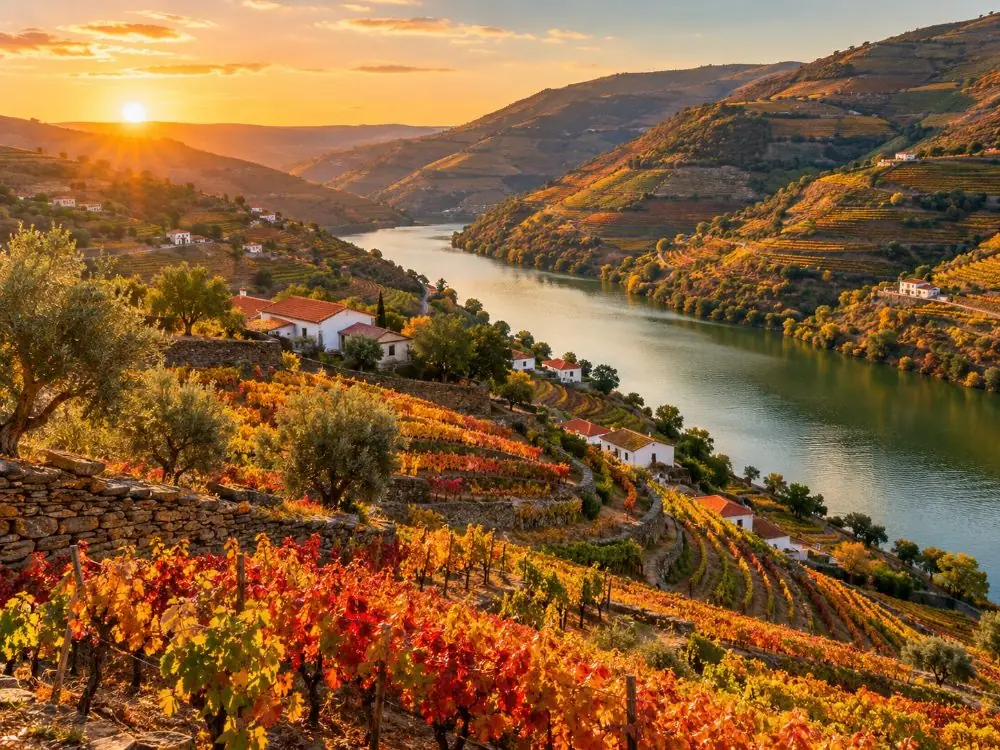
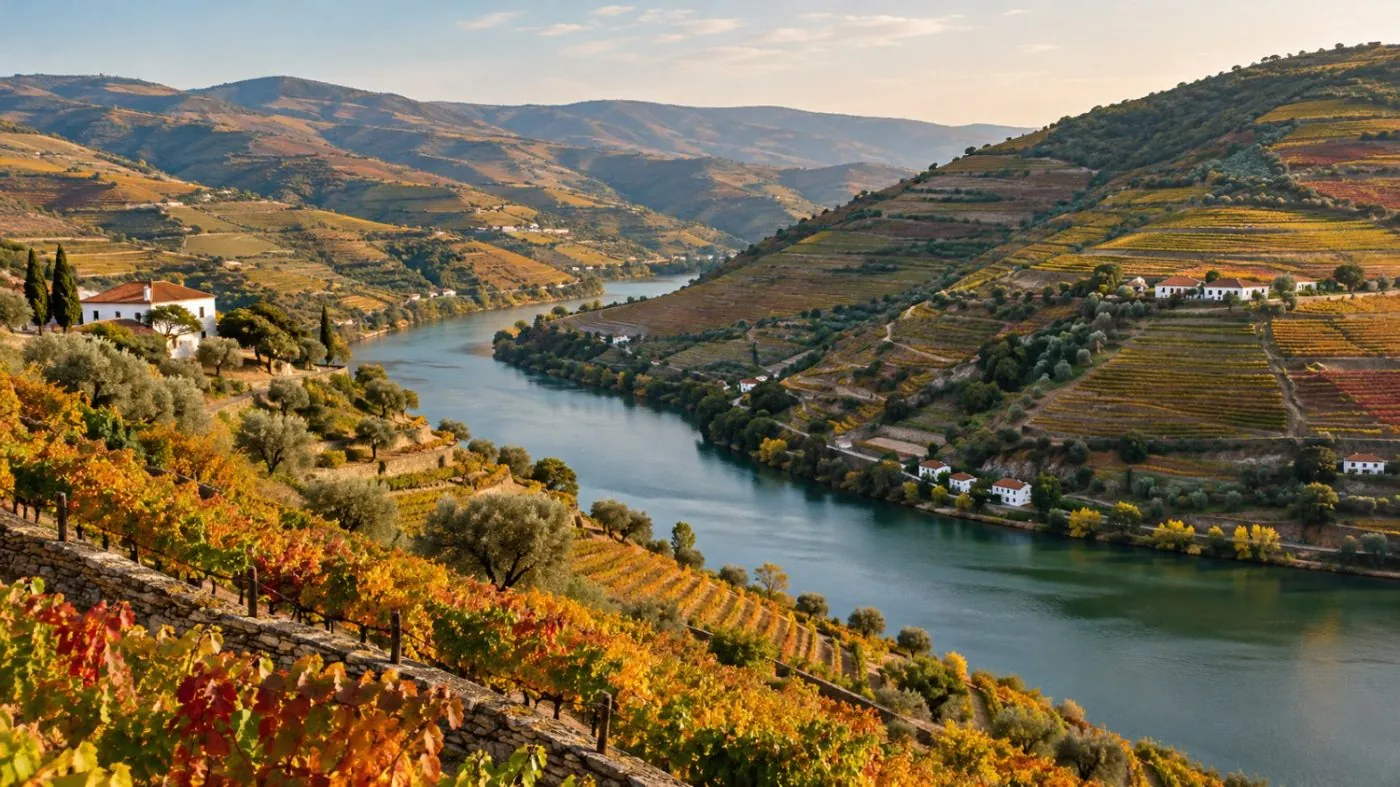
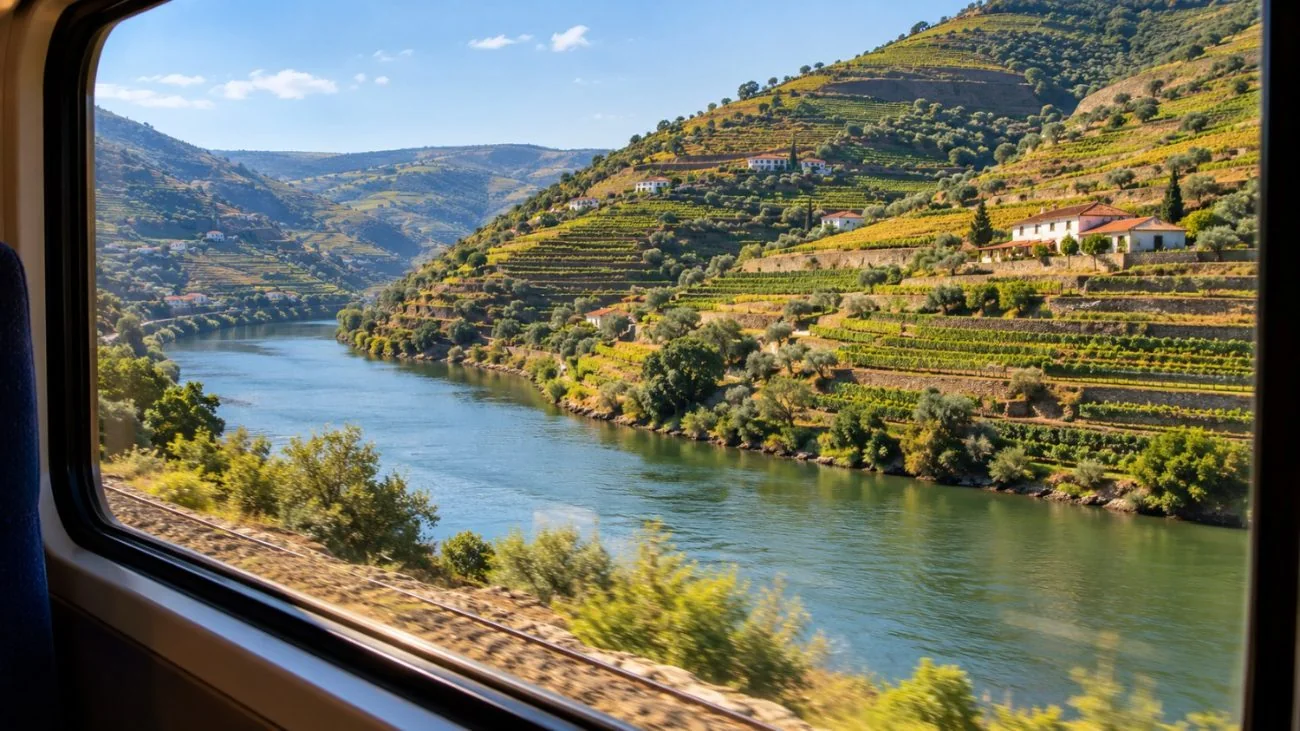
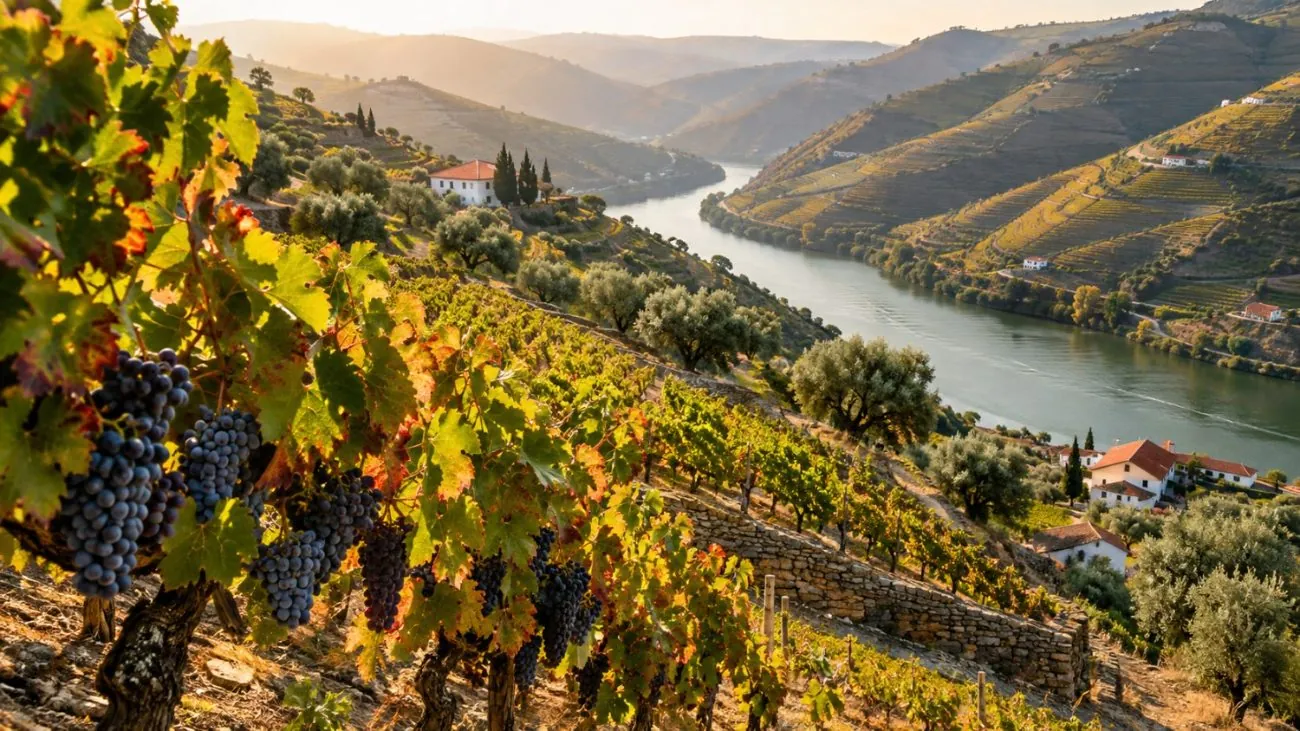
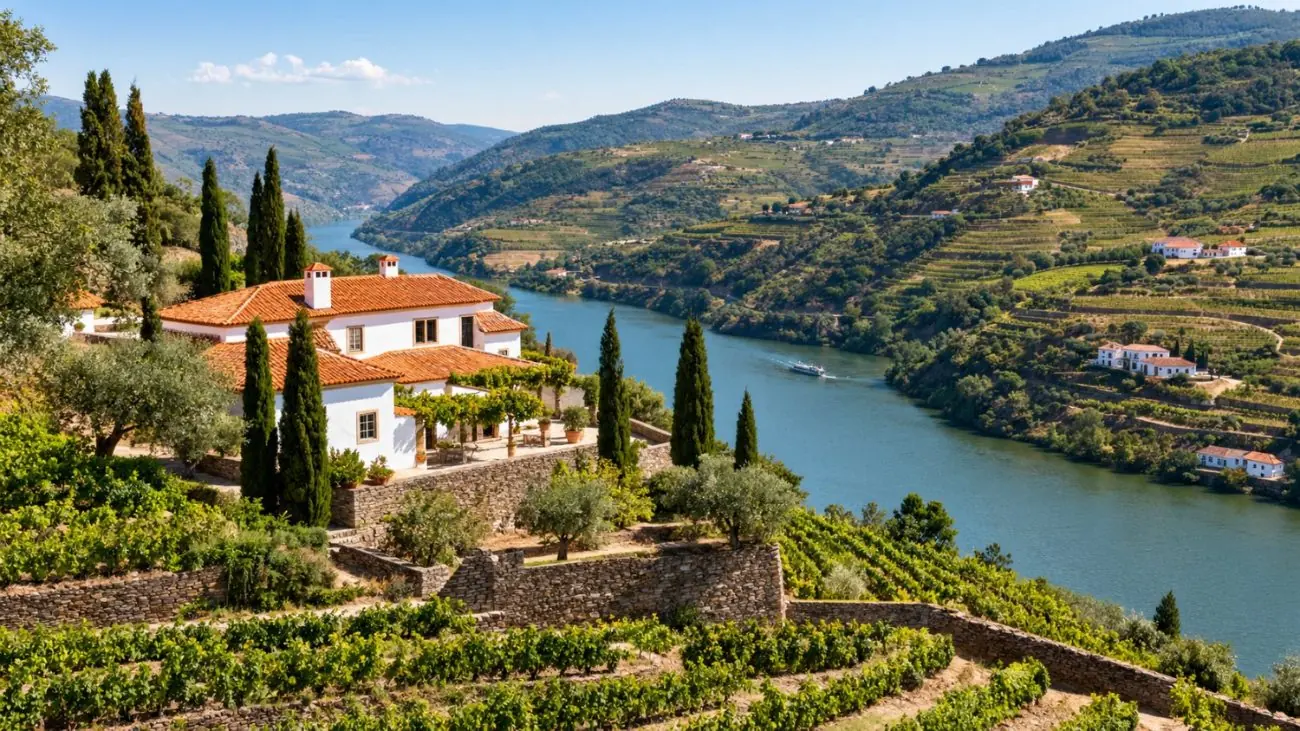
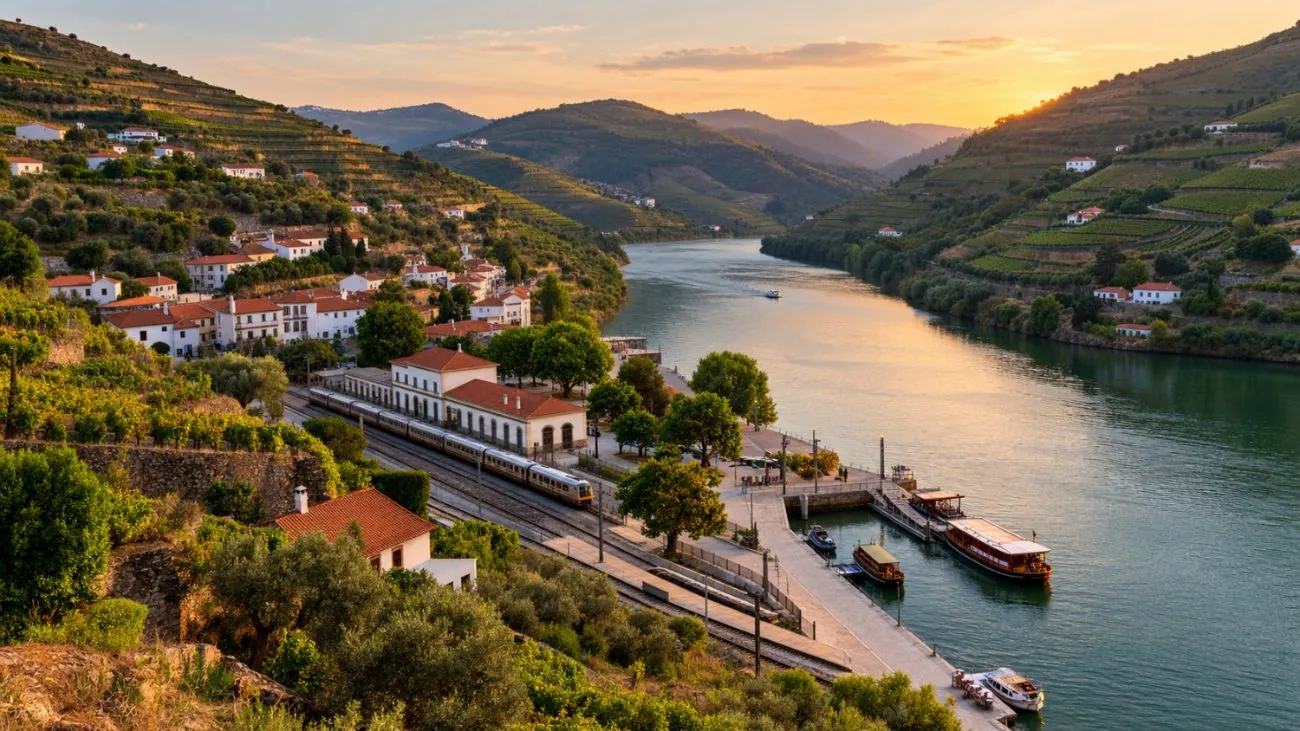
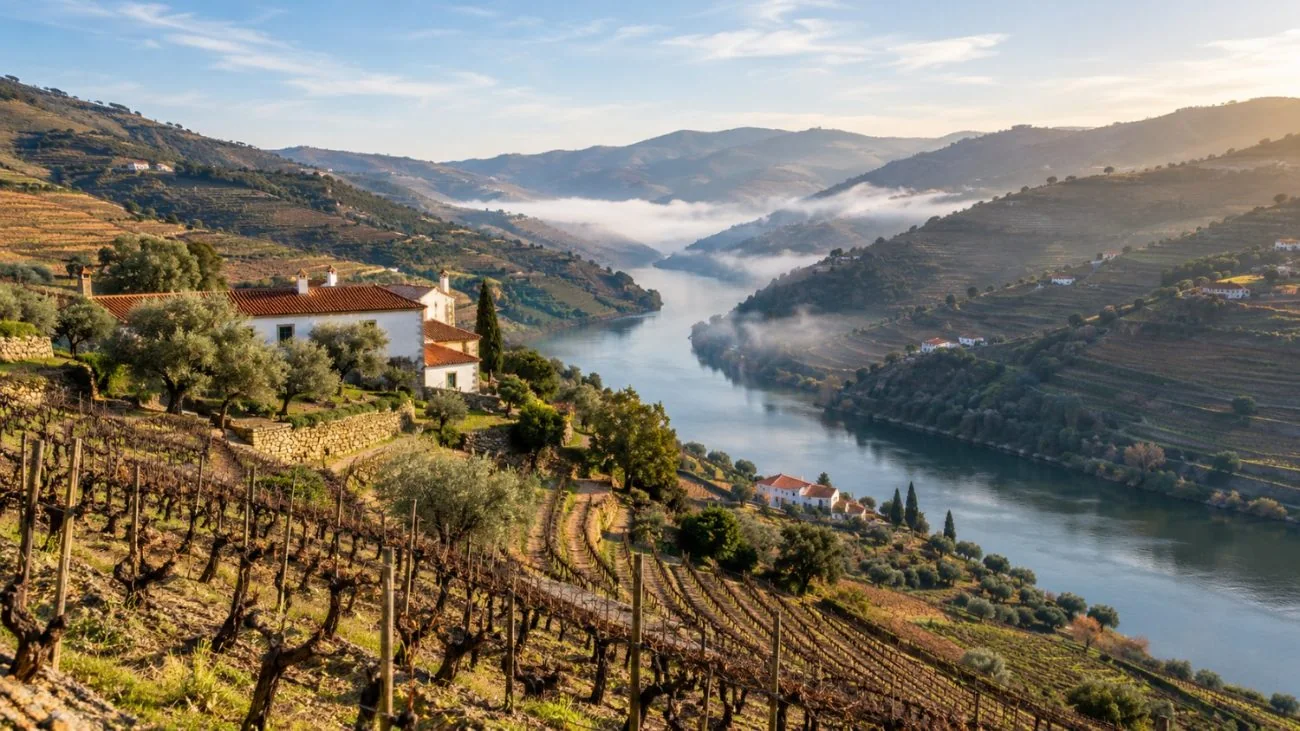
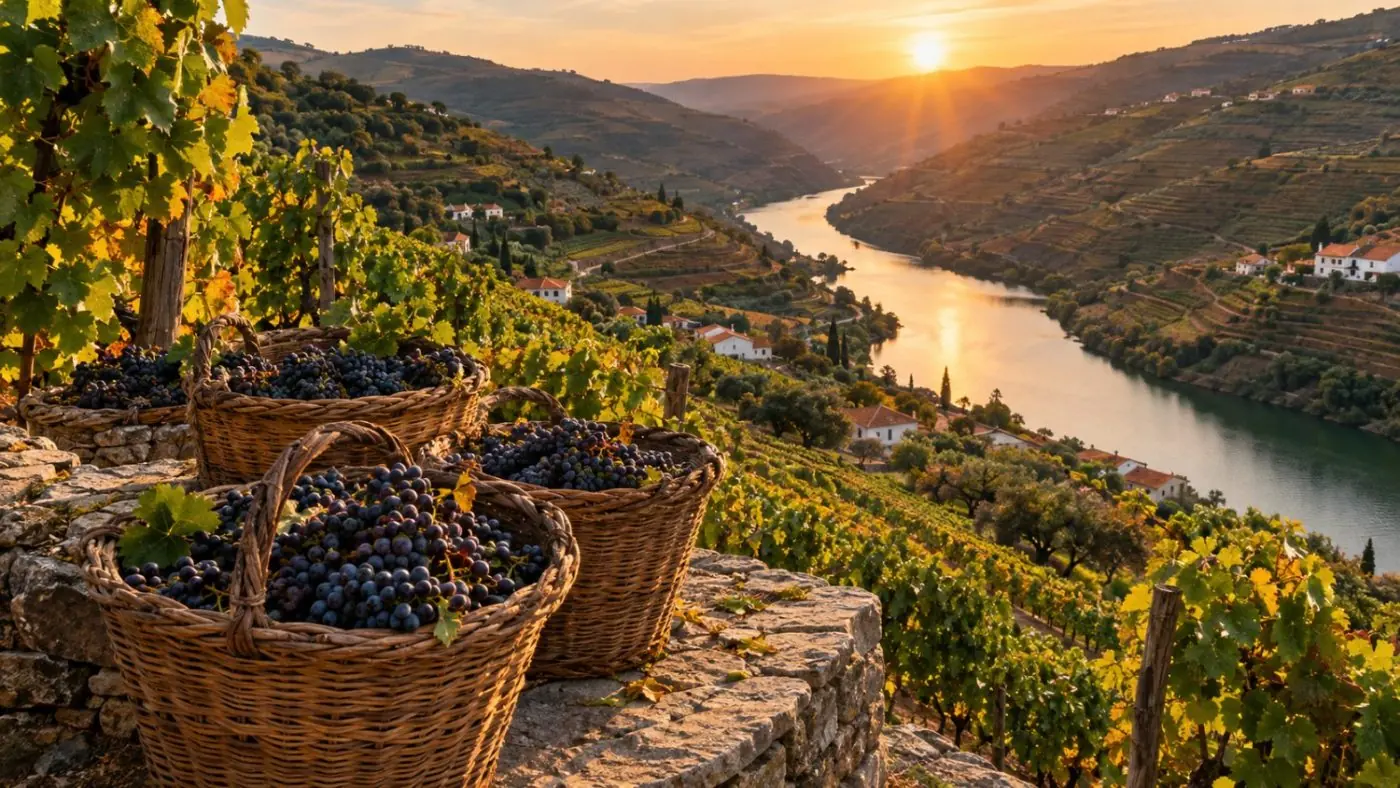
The oldest demarcated and regulated wine region in the world, a UNESCO landscape of schist terraces about two hours east of Porto.
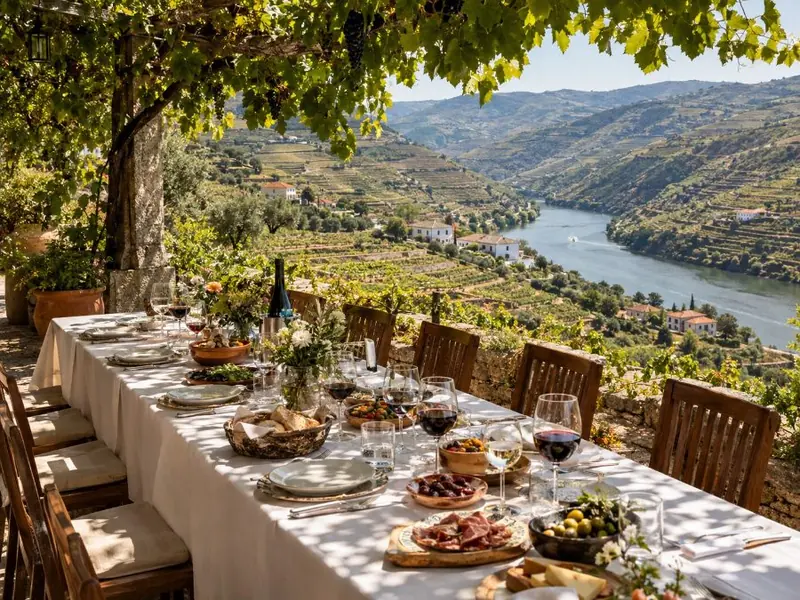
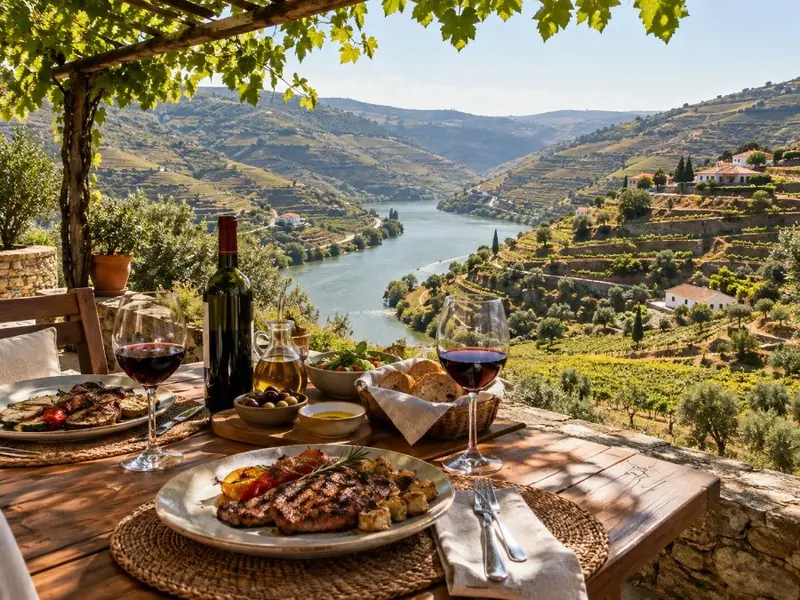
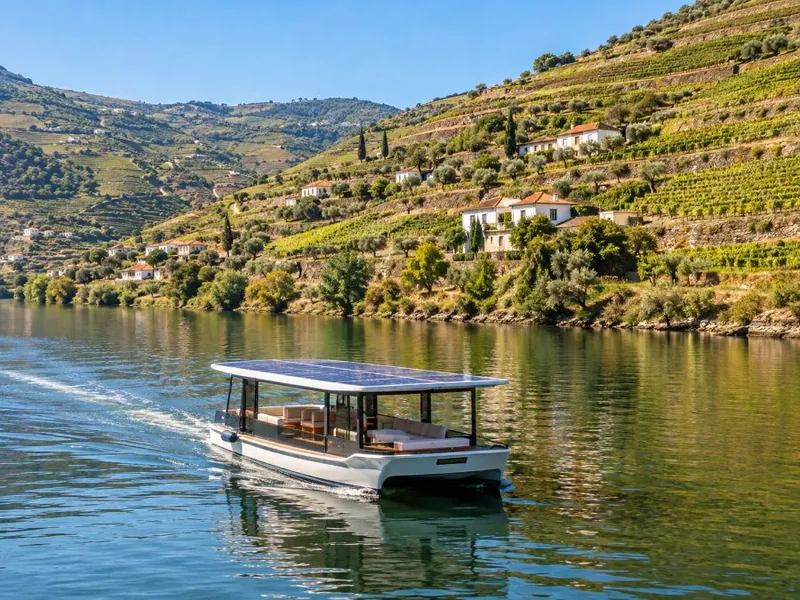
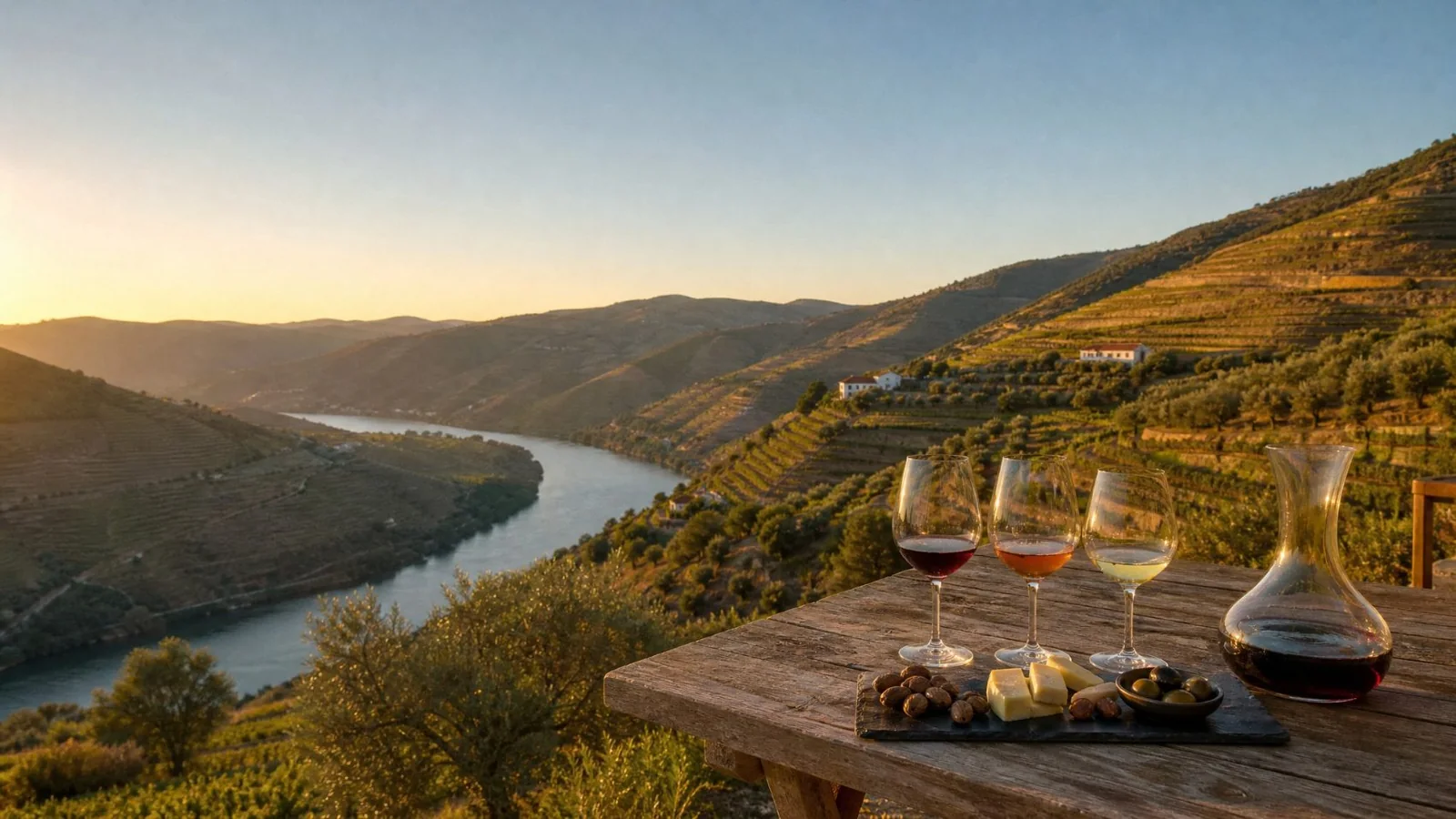
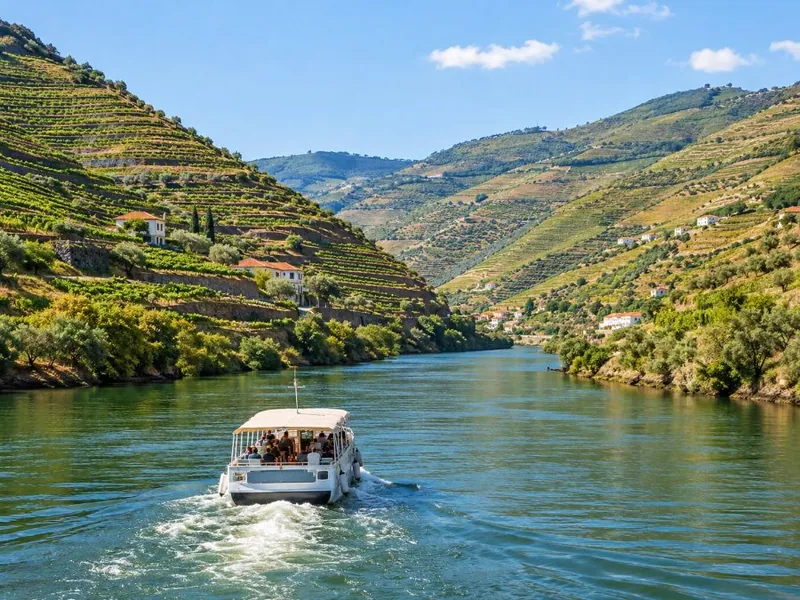
Taste Port where its grapes grow, linger over lunch above the river, then drift past the vines for an hour by boat.
Road time, spelled outHours in the van, from each itinerary
Real guest quotesFrom verified bookings only
Free cancellationUp to 24 hours before, on every tour here
Secure checkoutYou book directly on GetYourGuide
Tours
Choose your Douro wine tour
In the centre, the two-region day with hotel pickup and a private boat. Either side, the classic
Régua and Pinhão day, and a sommelier-led van of eight. Every card opens a full tour page.
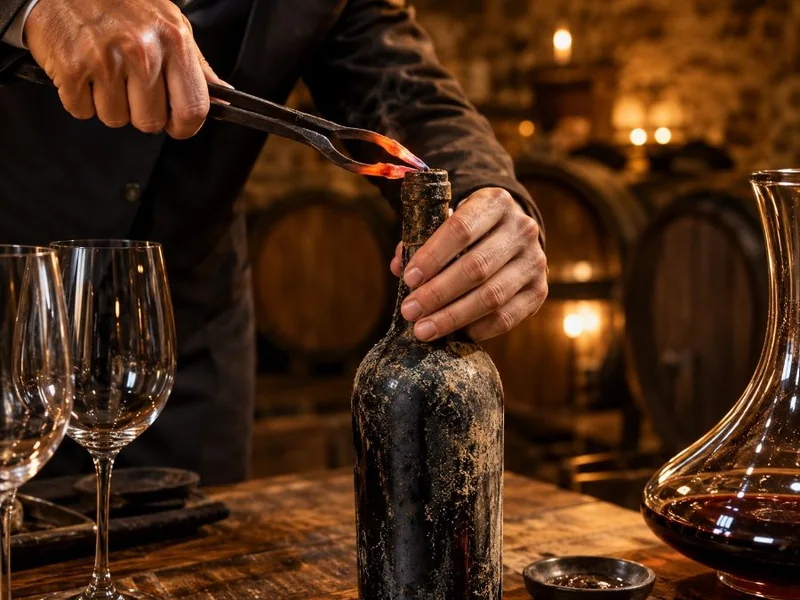
Starts in the Vinho Verde country around Amarante, then crosses into the Douro for a chef's lunch and a private boat. WSET-certified guides open a Vintage Port with fire.
What's included
Hotel pickup and drop-off in Porto
Two family-run wineries, one in each region
Chef's lunch with wine, vegetarian and gluten-free options
Three questions sort it out. How many hours in a vehicle will you trade for the valley? Do you want a
small van or are you happy on a coach? And would you rather sleep in Pinhão and skip the commute altogether?
Road times are read from each listing's itinerary, for the round trip. On the day trips, the boat is
a one-hour loop in the valley, not a ride from Porto. Free cancellation up to 24 hours before applies to every tour in this table.
Before you book
Two hours out, a day in the vines.
Almost every Douro wine tour sold online is a day trip from Porto, and they share a shape. A van or coach
leaves the city early and drives east towards Peso da Régua, about 100 km away, then follows the river on the N222
towards Pinhão. You usually taste at two estates, eat a long lunch, take a boat ride of about an hour and drive back.
What differs is how many people share your vehicle, which estates you visit and how much of the day you spend
on the road. Count it from the itineraries and it comes to about 3 to 3.5 hours of a 9 to 10 hour day. Two of the
best-known days also start in the Vinho Verde region around Amarante or Penafiel, which is a different wine region
on the way, not the Douro. If you would rather skip the commute, sleep in Pinhão: the boats and quintas there take an hour or two.
1756
The year the Marquis of Pombal set up the company that demarcated the Douro.
The port wine institute IVDP calls it the oldest demarcated and regulated wine region in the world.
PortDouro DOCVinho VerdeOlive oil
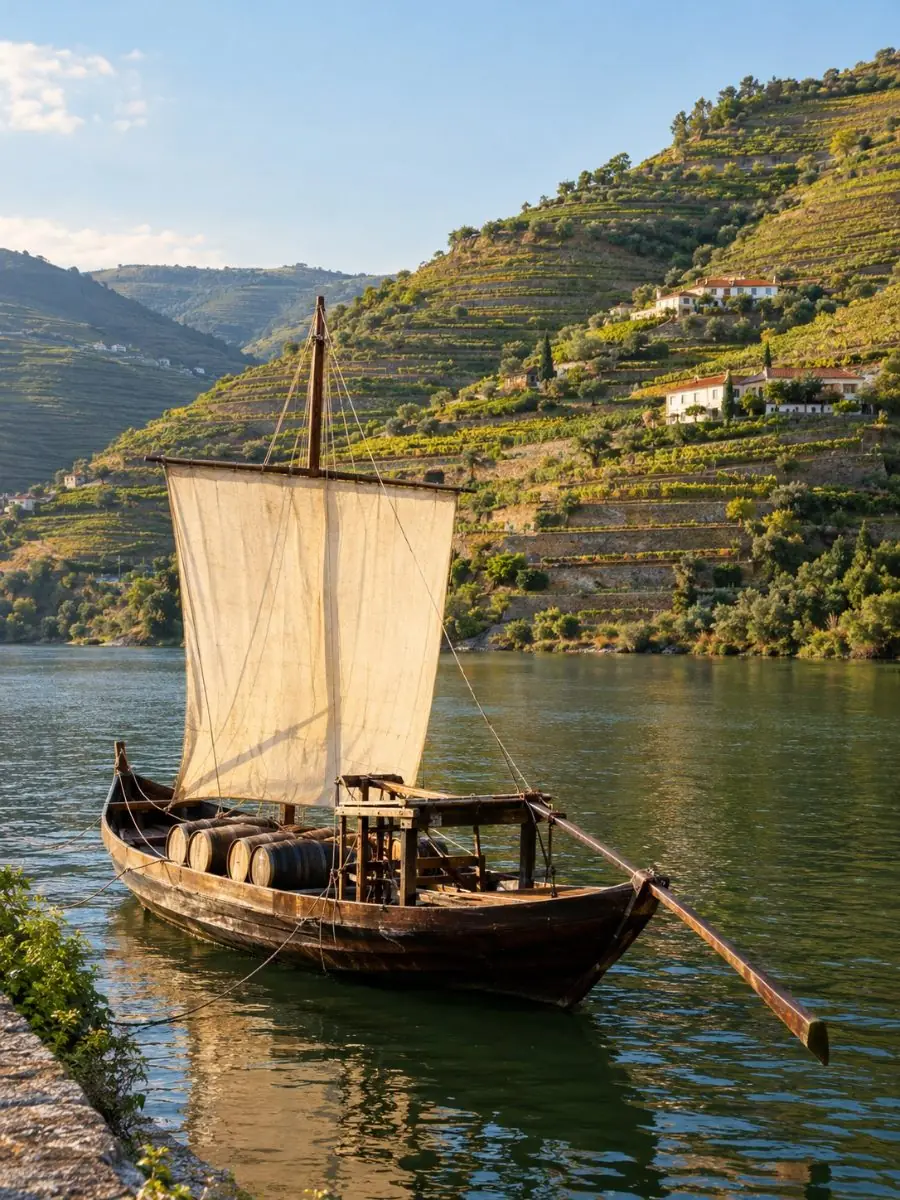
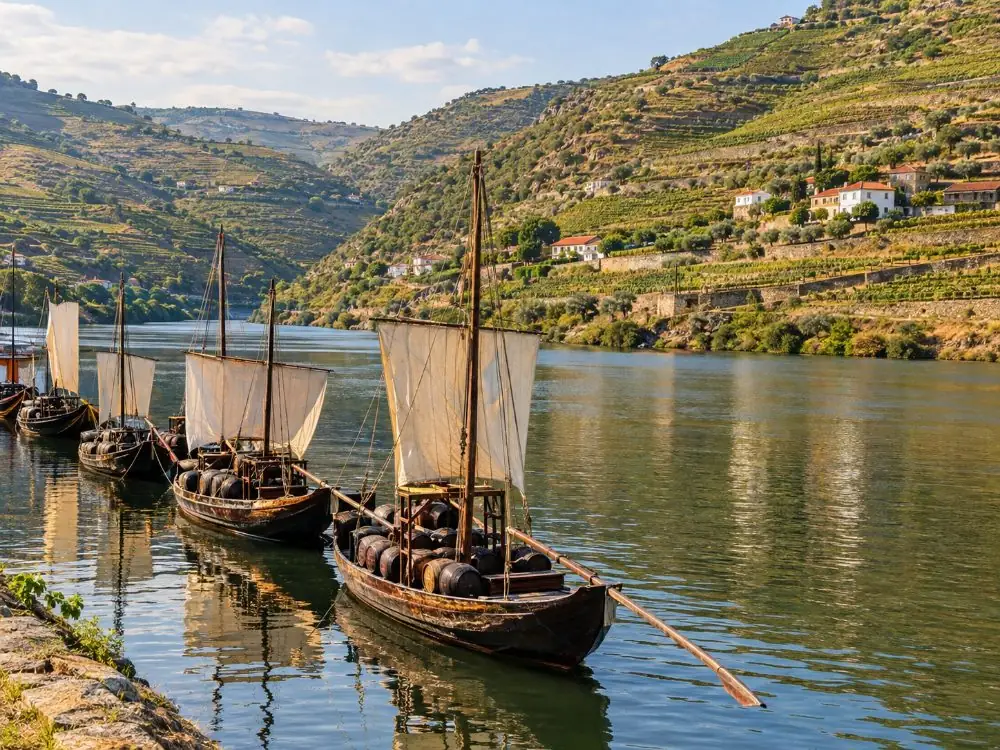
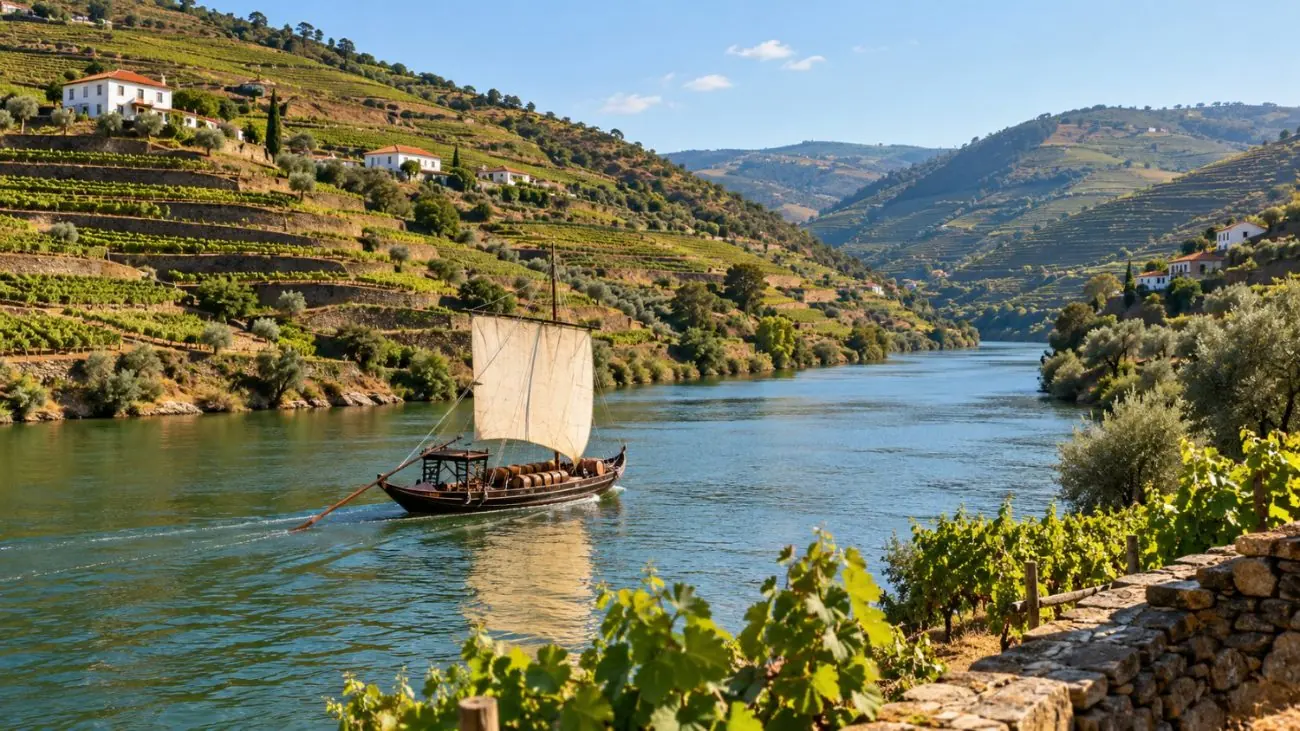
Rabelo boats once carried Port barrels downriver to the lodges in Gaia.
01
Where is it?
Peso da Régua is about 100 km east of Porto; Pinhão, the heart of the Cima Corgo, about 27 km further.
02
Do I need a car?
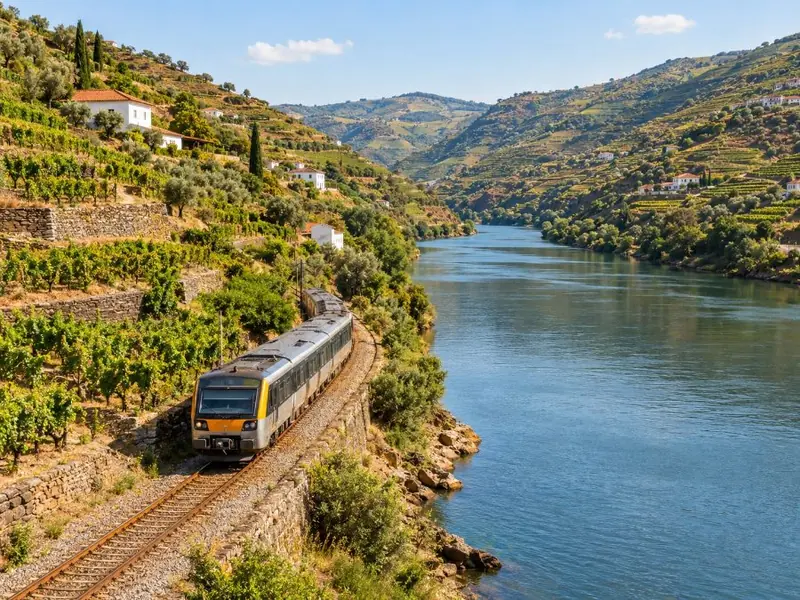
No. Every day trip here includes transport, and the Douro line train reaches Régua and Pinhão.
03
Is it Port only?
No. Most tastings pour Port and the still Douro DOC reds and whites, often olive oil too.
04
Who should skip a day trip?
Anyone who dislikes long drives or tight bends, and wheelchair users: most listings rule it out.
Your day
How a Douro day runs
Seven to ten hours from Porto, depending on the tour. This is the shape most itineraries follow.
01
Pickup in Porto
A meeting point such as Trindade or a hotel pickup, then the A4 east over the hills towards Régua.
75 to 100 minutes
02
First tasting
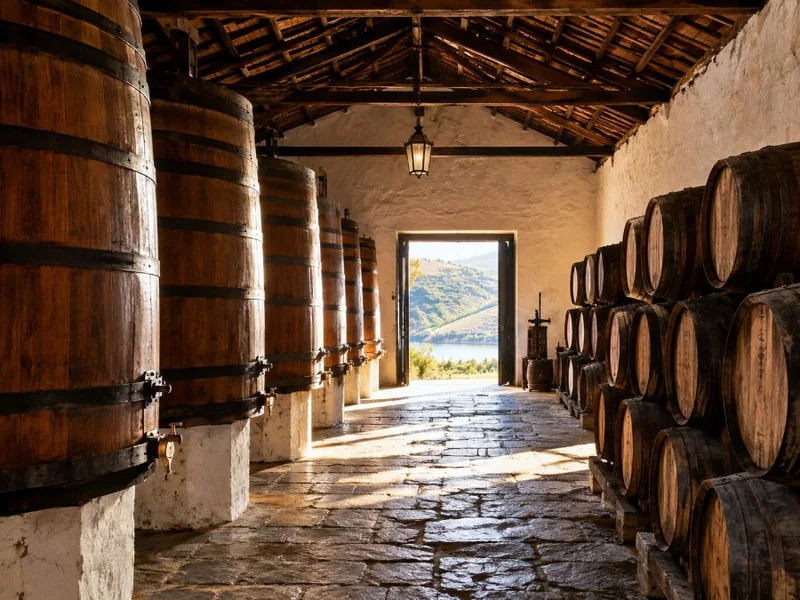
A guided cellar visit at a quinta or cooperative, then Port and Douro DOC wines, often with olive oil.
About 75 to 90 minutes
03
Lunch above the river
Regional food with paired wines at a winery or a cellar restaurant, usually the longest stop of the day.
1 to 2 hours
04
Boat, then home
A one-hour cruise from Pinhão, a viewpoint on the N222 and the drive back to Porto.
Seasons, getting there, the wines and what to wear: one tab each.
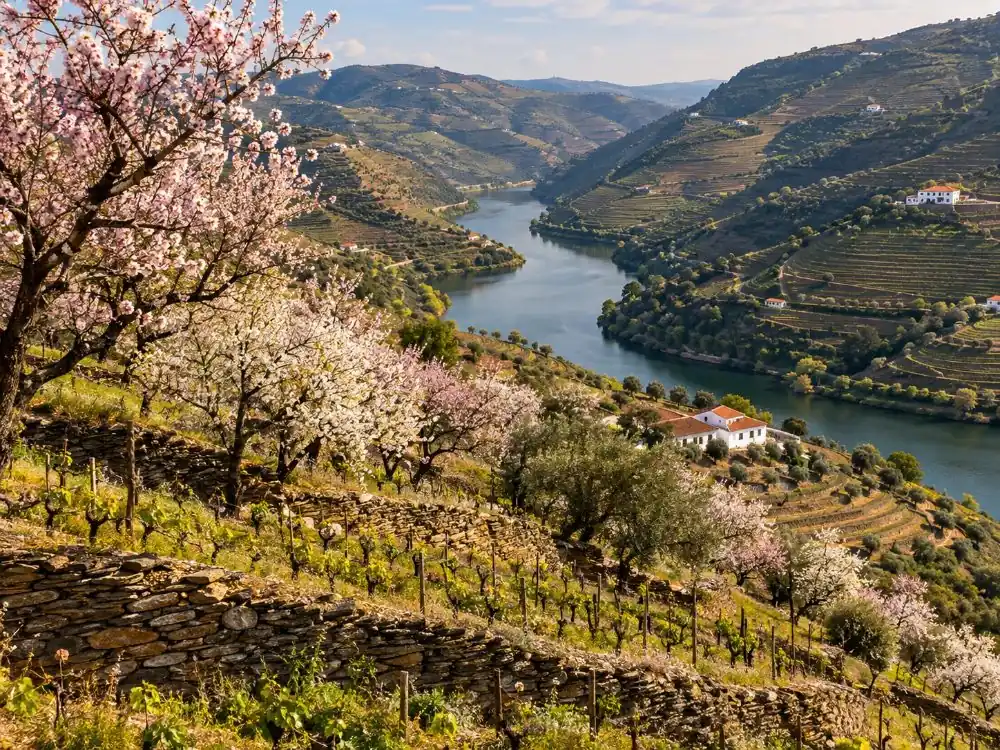
February and March: almond blossom in the upper Douro, cool days and quiet quintas.
April to June: green terraces and mild heat. Our pick for walking a vineyard.
July and August: hot. Régua averages about 32 °C by day, so plan shade and water.
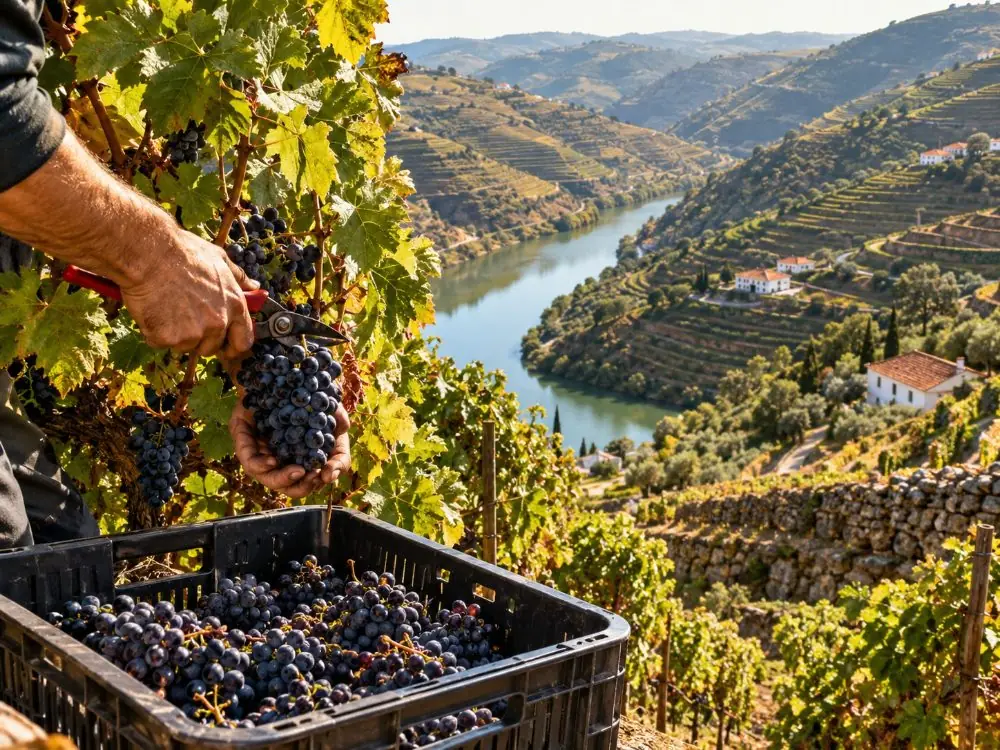
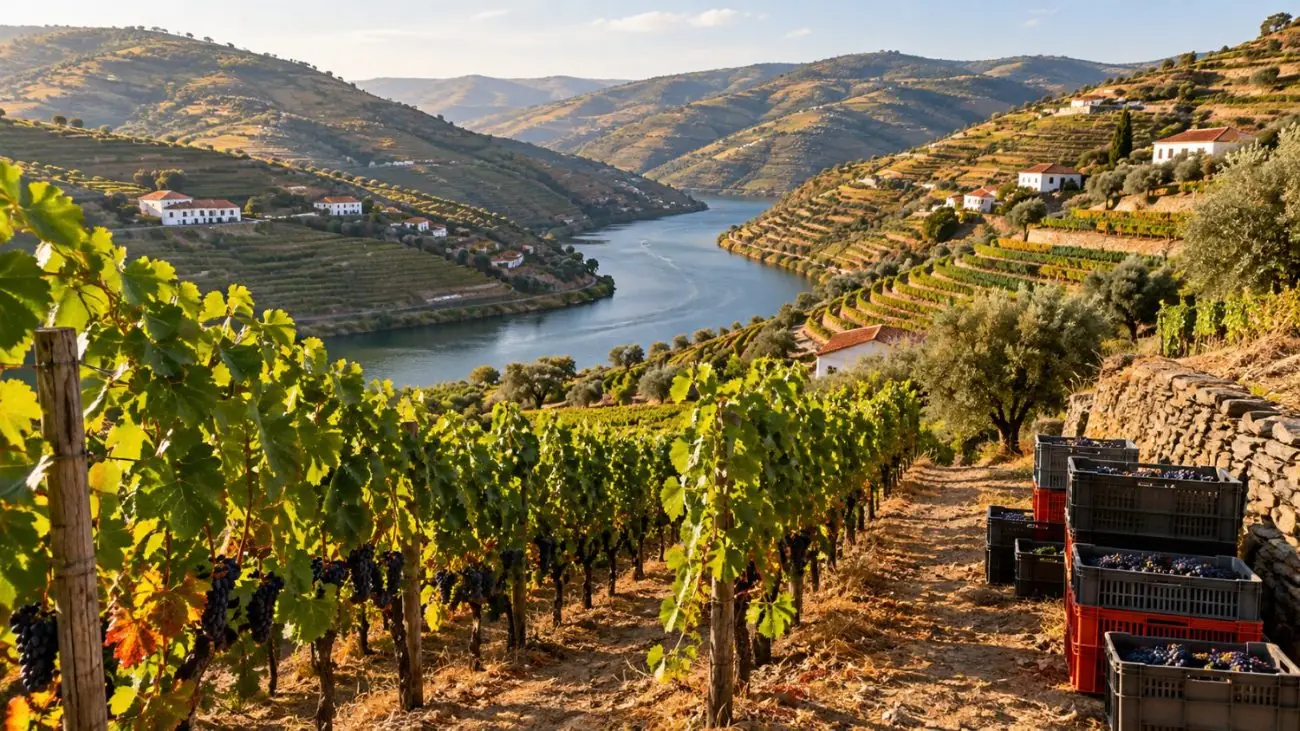
Late August to early October: the harvest. Picking now often starts in late August, earlier than it used to.
November to January: red and gold terraces, then bare vines. Shorter days; some estates cut their hours.
On a tour: transport from Porto is included on every day trip here.
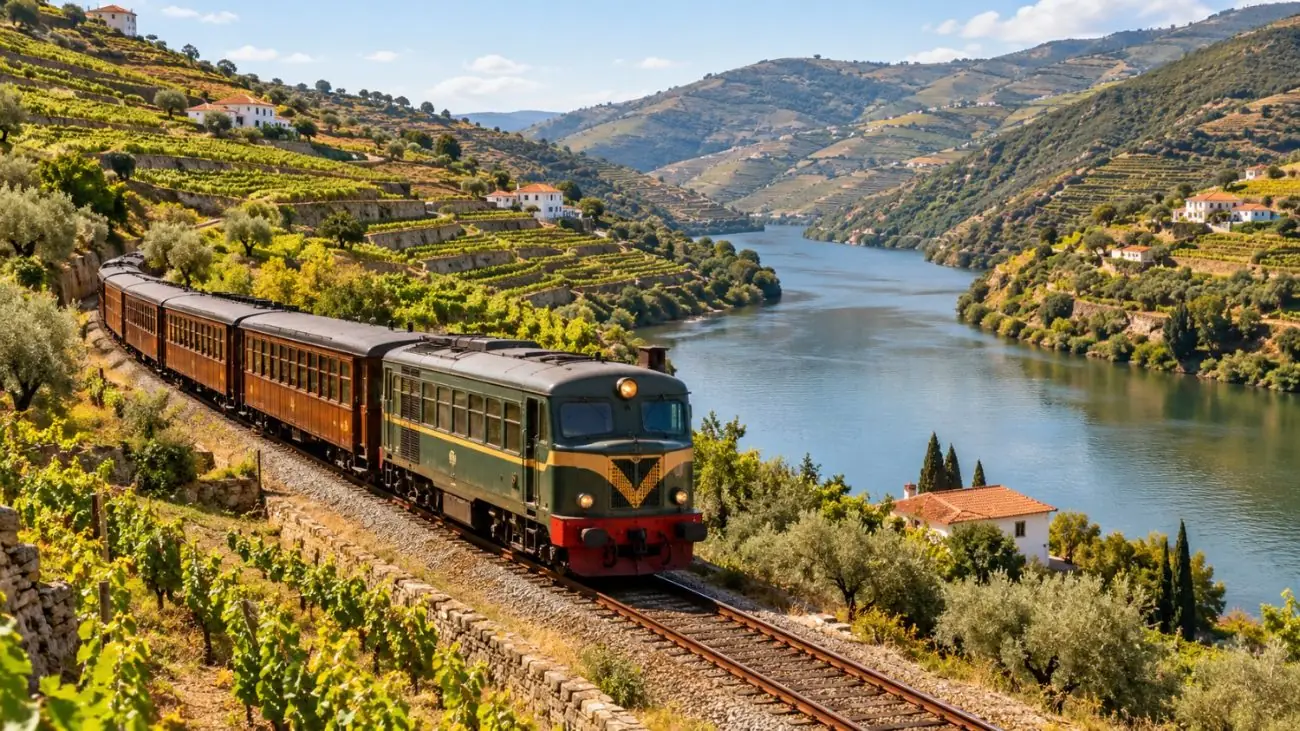
By train: the Douro line from São Bento reaches Régua in about 2 hours and Pinhão in about 2 hours 20 to 2 hours 30.
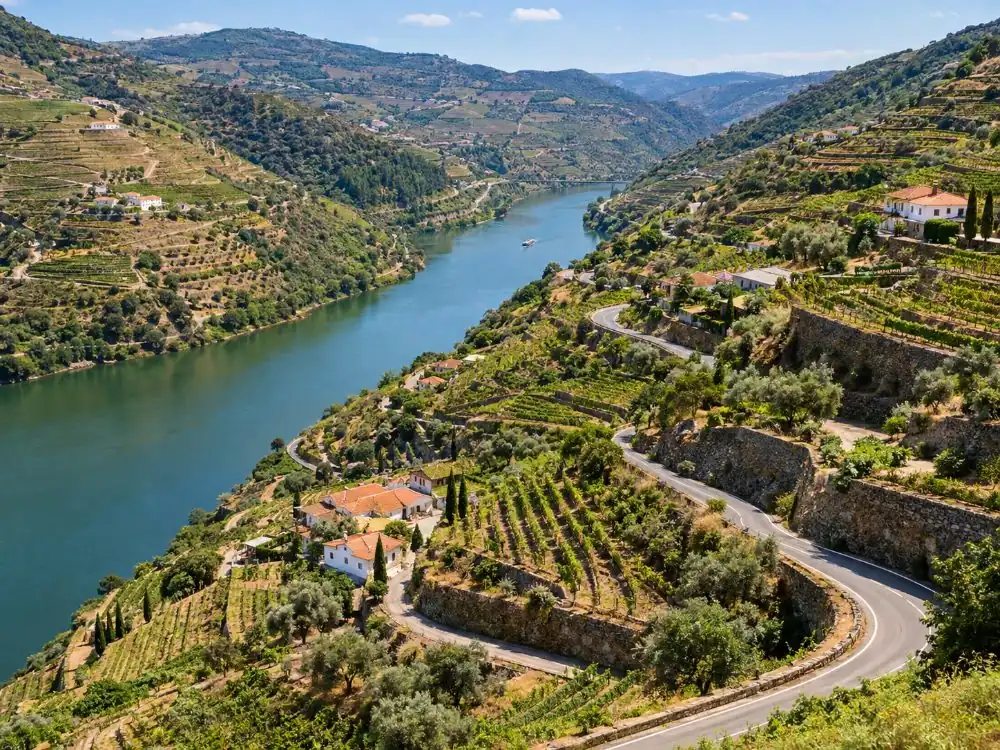
By car: about 100 km to Régua on the A4 and A24, then 27 km and 93 bends on the N222 to Pinhão.
From Lisbon: about 4 hours by road to Régua, so plan a night in Porto or in the valley.
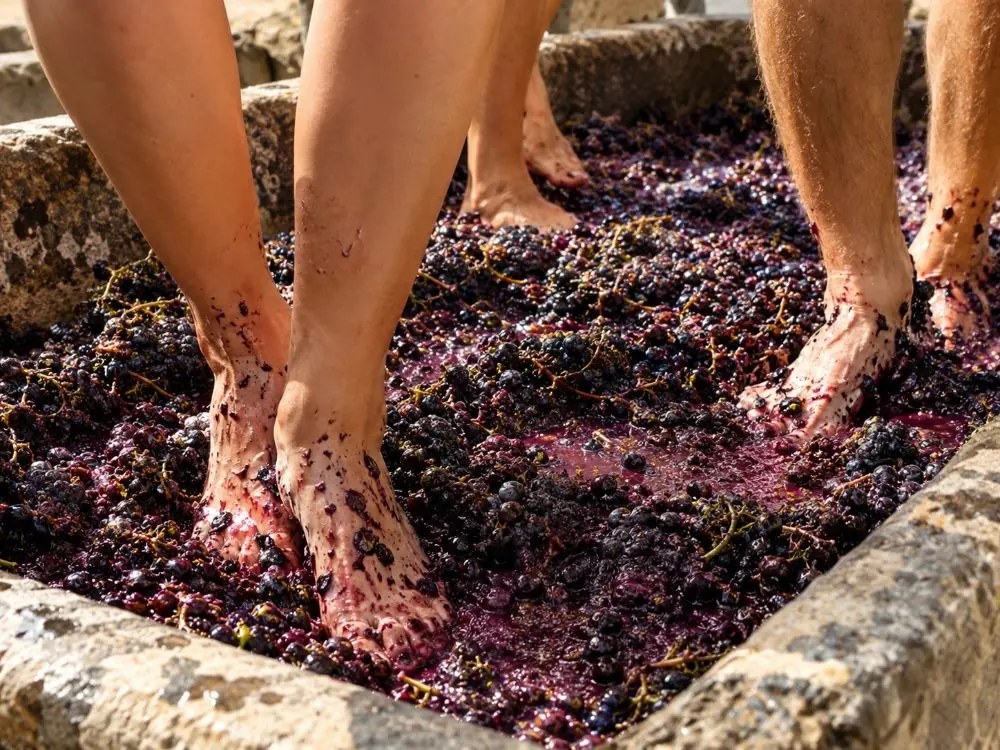
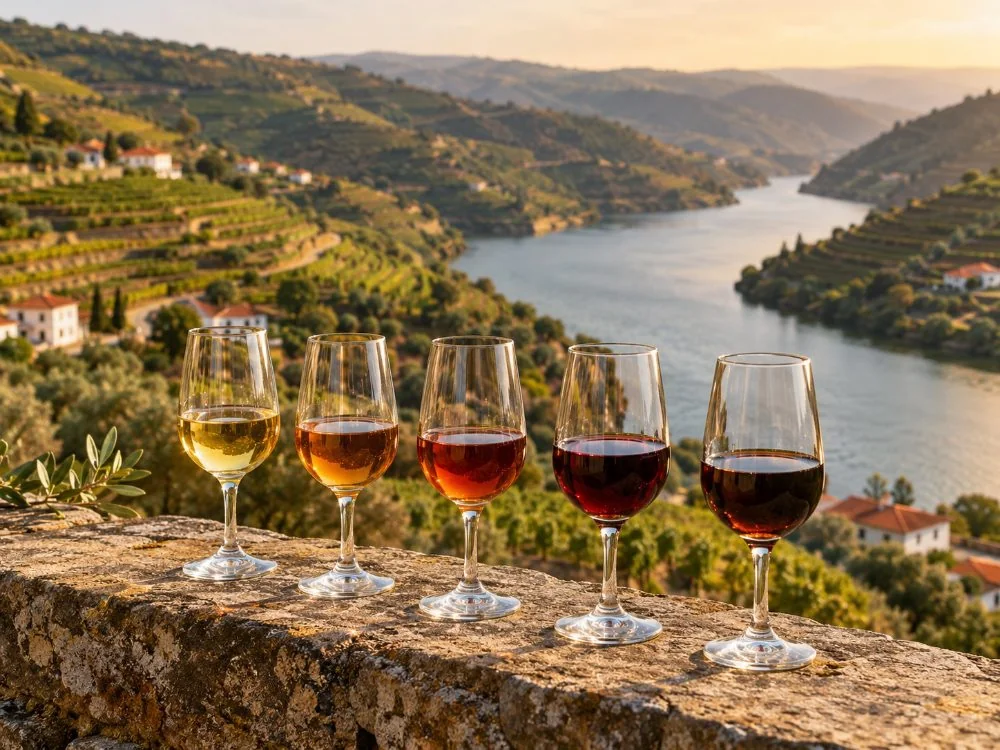
Port: fortified with grape spirit during fermentation, which keeps it sweet. Ruby, tawny, white and rosé styles.
Aged tawny and Vintage Port: some tours open old Port with fire, heating the neck with tongs until it cracks off cleanly.
Douro DOC: still red and white wines from the same terraces, mostly from Touriga Nacional, Touriga Franca and Tinta Roriz.
Vinho Verde: a separate region nearer Porto, poured on tours that stop in Amarante or Penafiel.
Flat shoes with grip: terraces are steep, paths are stony and cellars can be uneven.
Light layers. The valley is hot in summer, while cellars and boats feel cool.
A hat, sunscreen and water from May to September.
Smart casual is fine, jeans included. Dark colours hide a splash of red.
Peso da RéguaAbout 100 kmFrom Porto, gateway town with the Museu do Douro.
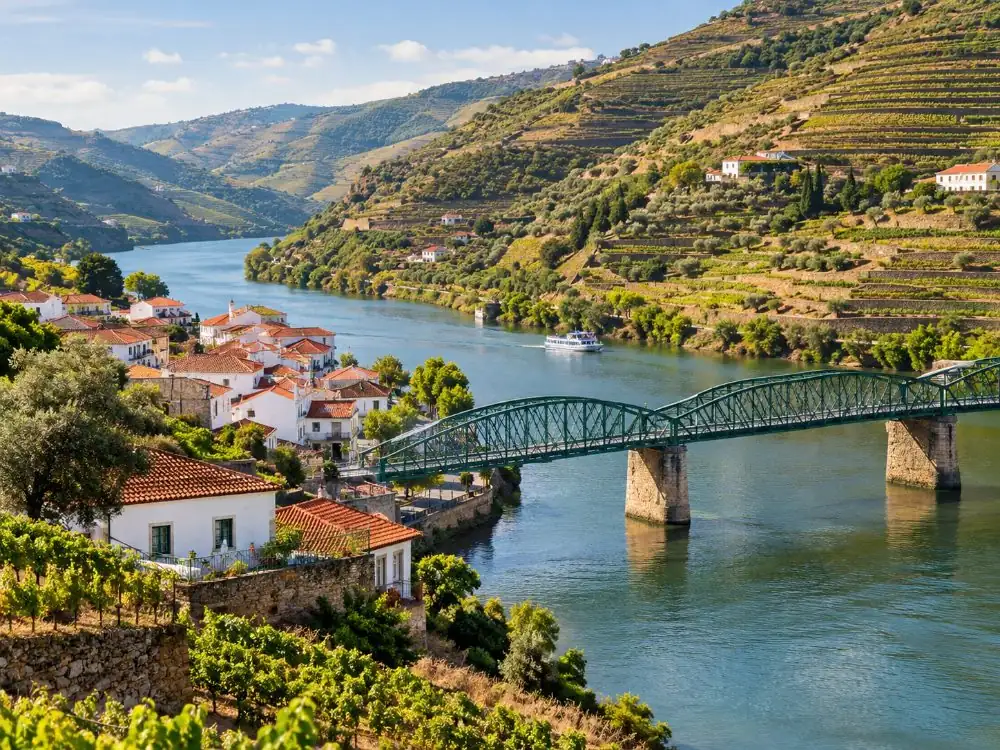
PinhãoAbout 2 hoursBy road from Porto; the valley's heart, with the boats.
Douro lineAbout 2 h 20By train from São Bento to Pinhão. Sit on the right.
On the road3 to 3.5 hoursOf a typical day trip, round trip, per the itineraries.
On the water1 hourThe usual cruise on a day trip, a loop from Pinhão.
Refund24 hoursFree cancellation up to a day before, on every tour here.
Where it happens
Where the valley begins
Two hours east, transport included
Typical starts: Trindade, Teatro Sá da Bandeira or your hotel in central Porto
There are no Douro vineyards in Porto itself. The city has the Port lodges, across the river in Vila Nova de Gaia,
where the wine has long been aged and shipped. The terraces start just west of Peso da Régua and run east past Pinhão towards
the Spanish border. Every day trip on this site includes the ride, and the train is the easy way in if you want to stay.
Peso da Régua: about 100 km, roughly 1.5 hours
Pinhão: about 2 hours by road
Vila Nova de Gaia lodges: a walk across the Dom Luís I bridge from Porto
The Douro grows the grapes; Gaia ages the Port. Cálem's riverside lodge runs a 30-minute cellar tour, an interactive museum on the region and a tasting of a white Port and a 10-year-old tawny. Do it the evening before your day trip and the valley makes more sense.
Every Douro day trip looks the same in the photos: terraces, a boat, a glass of Port. Here is how to tell them apart.
The valley is a long way from the lodges
Port has two homes. The grapes grow on the schist terraces of the Alto Douro, which UNESCO listed in 2001. The wine
was traditionally aged and shipped from the lodges of Vila Nova de Gaia, opposite Porto, and until 1986 Port for export
had to leave from there. That split explains the shape of every tour: the Gaia lodges are a walk from your hotel, the
vineyards are a morning's drive. A tasting in Gaia is not a Douro tour, and a Douro tour is mostly not about the lodges.
The region itself is big. The demarcated Douro covers about 250,000 hectares in three sub-regions: the Baixo Corgo
around Régua, the Cima Corgo around Pinhão, and the dry Douro Superior towards Spain. Day trips from Porto stay in the
first two, mostly within a few kilometres of the N222.
The terraces are cut into schist, which holds the heat and the little rain the valley gets.
Count the hours on the road
Add up the transfers in the itineraries and a typical 9 to 10 hour day spends about 3 to 3.5 hours in a vehicle. The
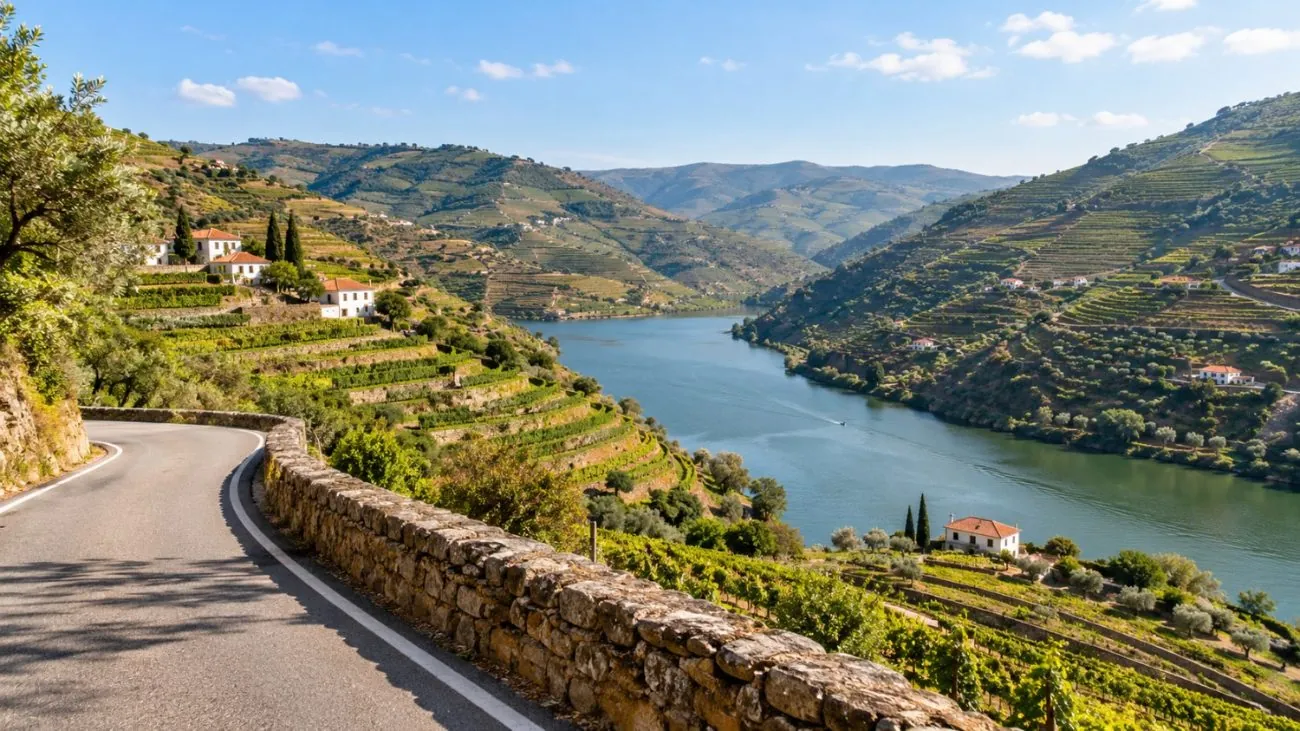
first leg is motorway; the last stretch is the N222 from Régua to Pinhão, 27 km and 93 bends, which a 2015 Avis study
ranked as the world's best road to drive. It is a fine road to be driven along, and a poor one after six tastings. If
the drive puts you off, there are two answers: a smaller van with fewer stops, or a night in the valley and a short
tasting such as Quinta do Bomfim.
The honest small print: the "river cruise" on a day trip is a one-hour loop from Pinhão or Régua, not a
ride from Porto. And a tour "from Porto with two wine regions" spends its first stop in the Vinho Verde country, before the
Douro begins. Both are good days; just know what you are booking.
Small van or coach
The most booked day on this site sells many seats per departure, and its listing warns that groups may grow and the
tour may become bilingual. It is the classic route and works well for first-timers. The small-group alternatives cap the
vehicle at eight and tend to visit family estates where, as one guest put it, the owners themselves pour. Expect a longer
lunch and more questions answered; expect fewer people to share the day with.
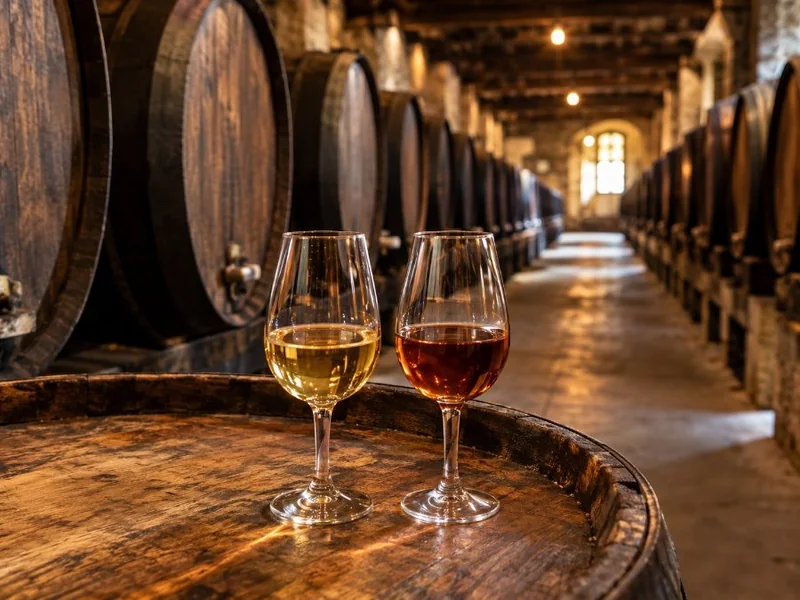
Most tastings run from white and ruby to an aged tawny.
When to go
May, June and the harvest weeks are the high points. The vindima now often starts in late August, and picking runs into
early October. July and August are hot in the valley: IPMA normals put Régua's average high above 31 °C, against about 24 °C
in Porto. Winter is quiet, cold in the mornings and lovely on a clear day, with almond blossom from late February. Whatever
the month, book the boat and lunch day a few weeks ahead in high season.
For most visitors to Porto, yes: it is the easiest way to taste in the region without driving the winding N222. Know what you are buying, though. A 9 to 10 hour day usually includes about 3 to 3.5 hours on the road, and the cruise is a one-hour loop in the valley.
How long is the train ride from Porto to the Douro Valley?
About 2 hours to Peso da Régua and about 2 hours 20 to 2 hours 30 to Pinhão from São Bento, depending on the service. Sit on the right going east for the river. The train guide has the details.
How long is the drive from Porto to the Douro Valley?
Peso da Régua is about 100 km east of Porto on the A4 and A24, roughly 1.5 hours. Pinhão is another 27 km along the N222, so about 2 hours in total. Day tours add photo stops on top.
What is the best time of year to visit the Douro Valley?
Late spring (May and June) and the harvest weeks from late August to early October. Midsummer is hot: Régua averages about 32 °C by day in July and August. See the season guide.
Is the Douro Valley hotter than Porto?
Yes, much hotter in summer. IPMA climate normals give Régua an average July high of 31.7 °C against 24.2 °C in Porto. Bring a hat and water, and dress light.
How much time do I need in the Douro Valley?
A day trip from Porto shows you the scenery and two estates. Two nights in Pinhão or Régua let you visit quintas at an easy pace, take a boat and walk to a viewpoint. Compare bases in where to stay.
Where can I stay in the Douro Valley without a car?
Pinhão and Peso da Régua both have train stations, boat quays and quintas within walking distance or a short taxi ride. Pinhão is the smaller and prettier base; Régua has more shops and the Museu do Douro.
What is the most famous wine from the Douro Valley?
Port, a fortified wine made from Douro grapes. The valley also makes still red and white wines labelled Douro DOC, which most tours pour too. The wineries guide explains the styles.
Are Douro River cruises worth it?
A one-hour cruise from Pinhão or Régua is the best-value part of many day tours: calm water, terraces on both banks. A full-day cruise from Porto is a different product with long stretches between locks. Read the cruise guide before you choose.
How should I dress for a Douro wine tour?
Light, breathable clothes and flat shoes with grip: vineyard paths are steep and stony, and cellars are cool. Jeans are fine in Portugal. In summer add a hat and sunscreen.
Can I cancel a Douro wine tour?
Every tour on this site cancels for a full refund up to 24 hours before the start. Check your confirmation for the exact meeting point.
Ready to book
Pick your day, pour the first glass.
Transport from Porto on every day trip, and free cancellation up to 24 hours before on every tour.

 Most booked
★ 4.77 to 10 hoursFree cancellation
Most booked
★ 4.77 to 10 hoursFree cancellation